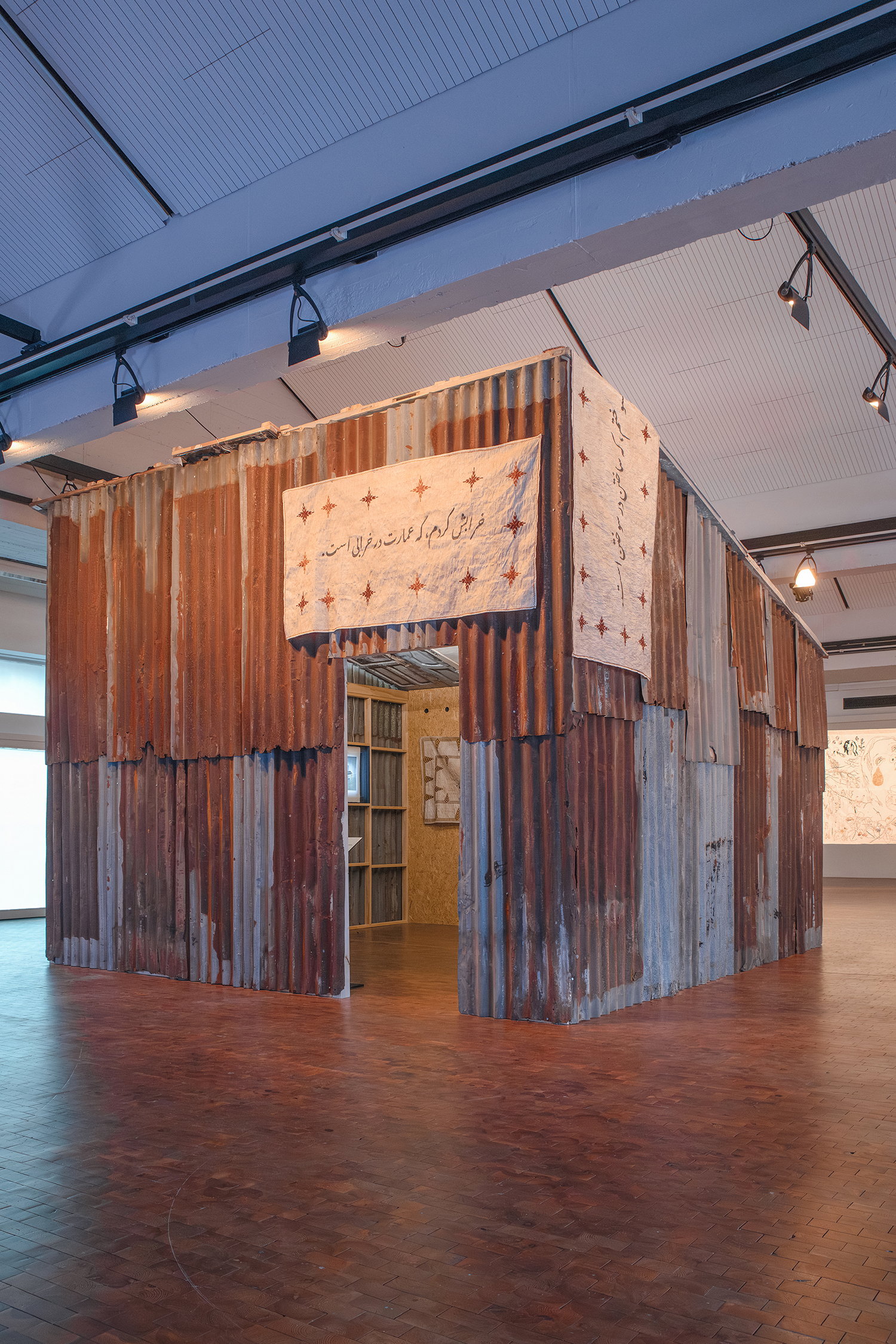
Installation, 3,5 × 4,5 × 8,5 m
Every place has its own alphabet: an exclusive language in which it responds to the surrounding environment and tells us whose milieu it has constituted, and to whom it beckons. At a higher level, it defines the spiritual climate of that place.
The seeker of realms longs to capture the spirit of places. She feels that she belongs to none and to all. She picks a word and a letter from each place and each language. She makes a borrowed, patchwork body from the body parts of others. Out of a thousand pieces, these body parts make up a home together. The seeker fashions a home that stands in admiration of any concept of home, but simultaneously regards it with a grimace. Every time she is rejected by circumstance, the home becomes embodied in a different corpus. She parts with every home. She lets go and is let go: suspended somewhere between being the narrator and the narrative itself, between watching and being watched, between reality and its double.
Can she who seeks the answer to the question, “Which ship belongs to Theseus?” and has found herself amongst many different selves, find the Theseus who dwells within her?
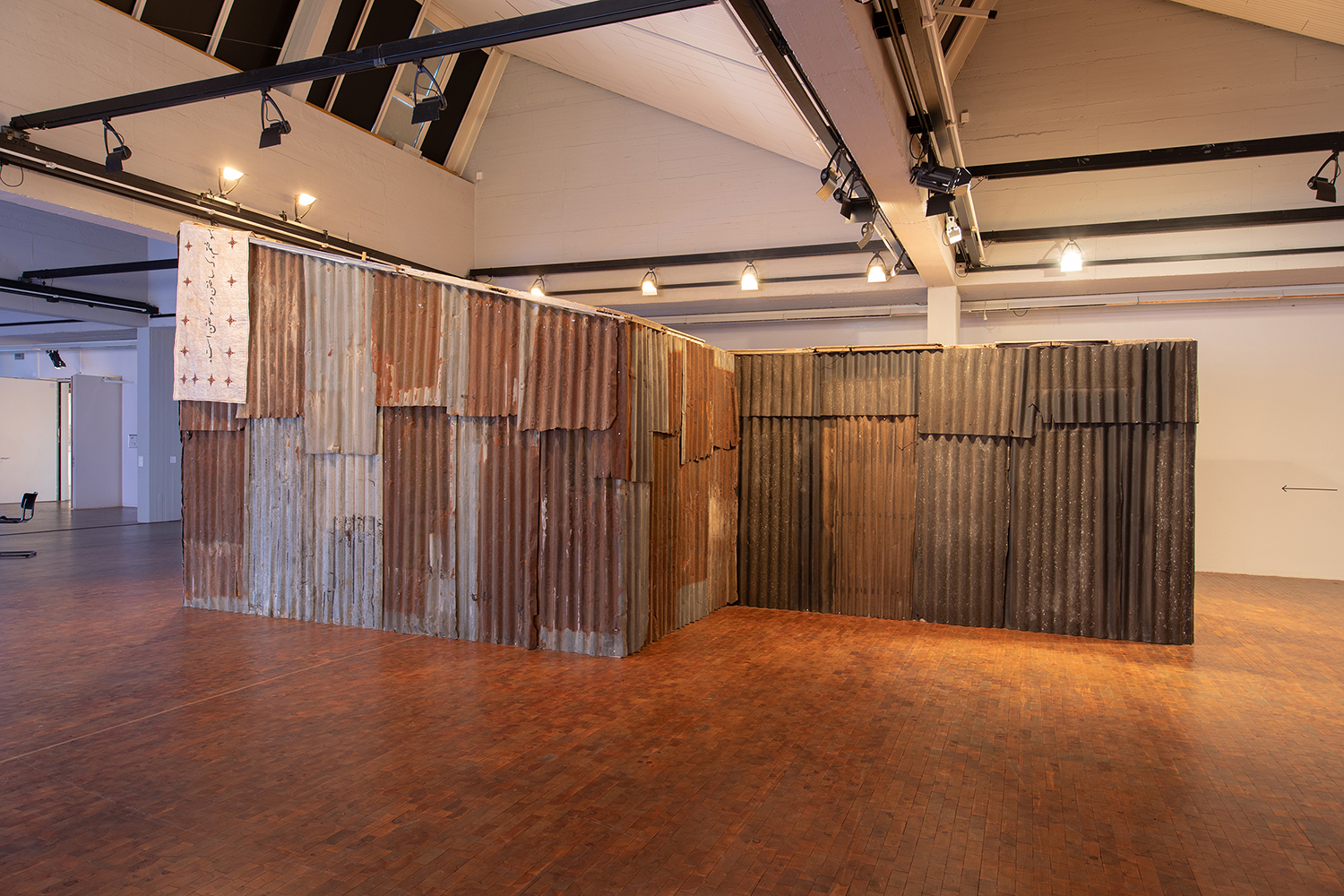
-Mahsa Aleph’s installation features a space constructed from discarded building materials found in dumping sites in the outskirts of Tehran. This material, often used by migrant workers to construct makeshift homes, prayer spaces, and other shelters in Iran, has traveled miles to find its place in this installation. This space speaks of territory, of margins, and of multiple identities embodied in multiple bodies and spaces. It speaks of otherness and of gender roles: of who sees whom and what happens “in”and “in-between” segregated spaces. Mahsa’s work fosters contemplation about where we consider to be home and to what degree that home mirrors our true selves.
Mahsa Aleph’s installation features a space constructed from discarded building materials found at dumping sites on the outskirts of Tehran. Often used by migrant workers to construct makeshift homes, prayer spaces, and other shelters in Iran, this material has travelled miles to find its place in this exhibition. This space speaks of territory, of margins, and of multiple identities embodied in multiple bodies and spaces. It speaks of otherness and of gender roles: of who sees whom and what happens “in” and “in between” segregated spaces. Mahsa’s work fosters contemplation about where we consider to be home and to what degree that home mirrors our true selves.

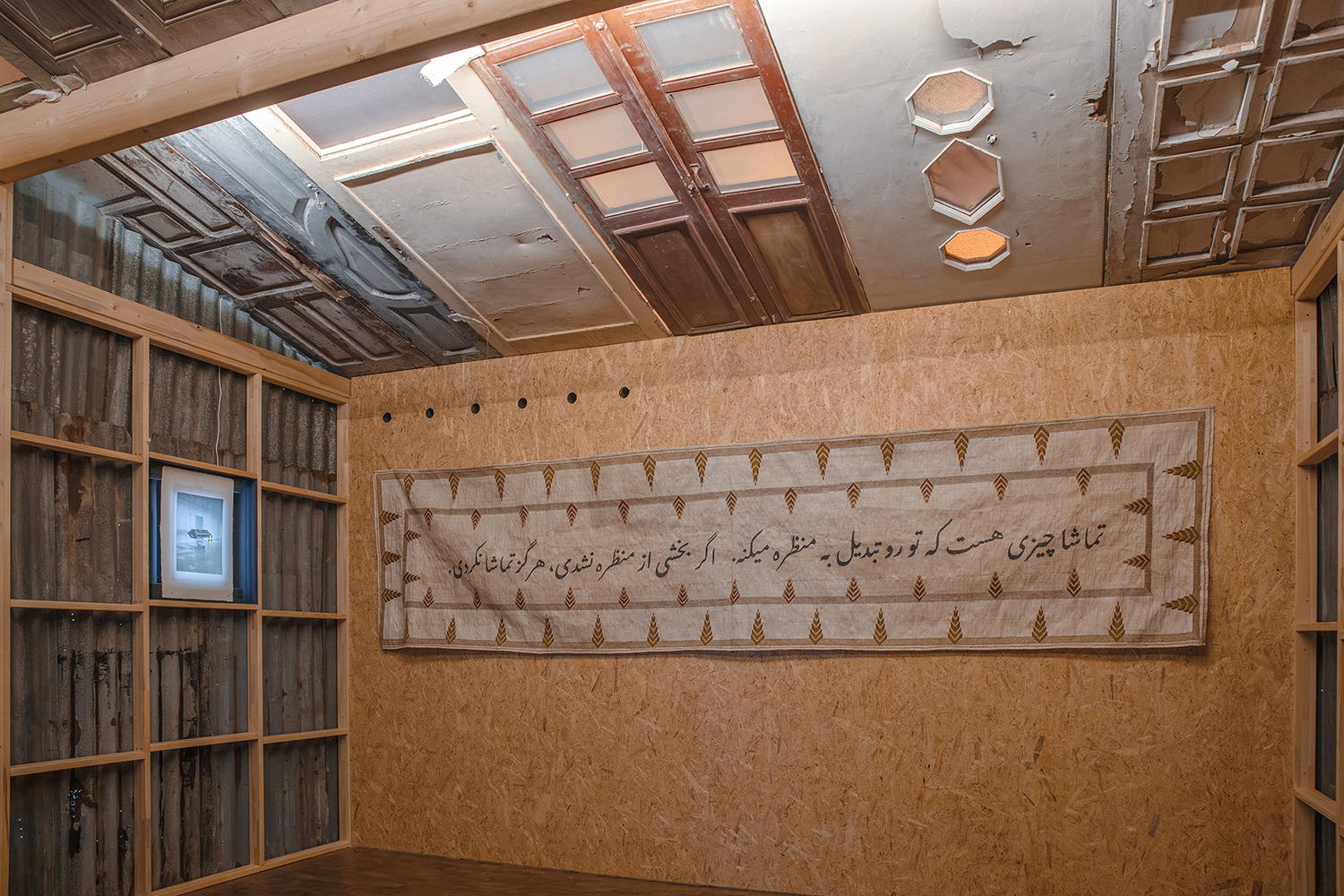
Plastic burlap with hand-stitched patterns and stencilled text from the artist’s notebook,. 100 x 400 cm,. 2024 In most public buildings in Iran such as schools, mosques, and prisons, it is common to hang or paint ethical slogans adorned with decorations on the walls. Translation: Watching is the act that transforms you into the landscape. If you’ve never been part of the landscape, then you’ve never watched.

“Home returns home,” Digital photograph, 32x24cm, Berlin Brandenburg Airport.2023. The photograph was taken at the artist’s moment of encounter with a lifeless body/home waiting to enter an airplane, to be shipped back to its homeland. This coincided with the moment when the doors (body-parts of homes that no longer exist) were arriving from Tehran. One is departing, and the other, returning home.

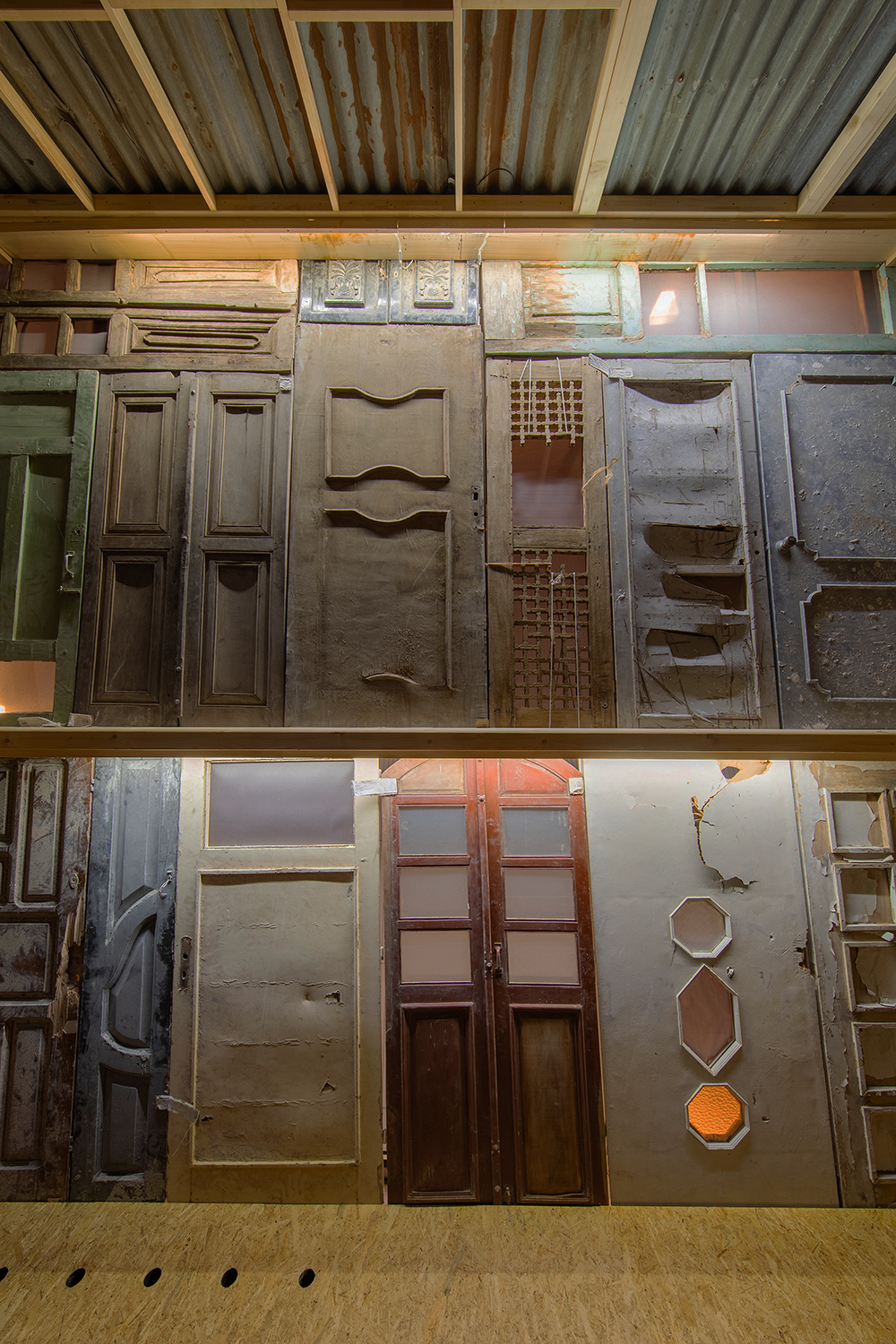
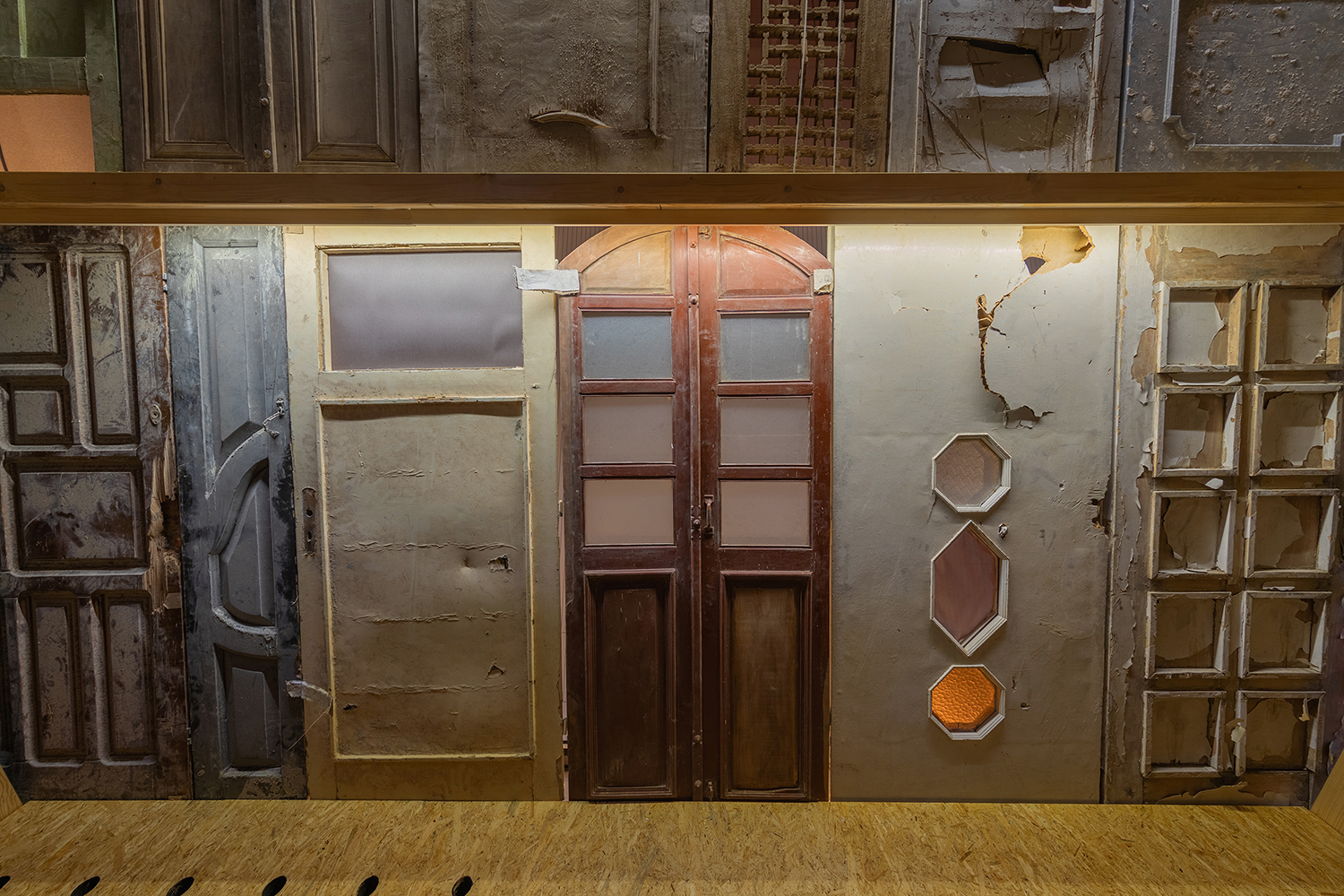
The ceiling of the space is, made of 20 discarded doors found at construction waste sites in the eastern outskirts of Tehran. Each door is from a different period, a different architectural style, and a different neighbourhood. The large room represents the main space, called Birooni (ser), which in Persian means ” outer-space”. The Birooni is part of the public quarters of historic houses in Iran and is, often the domain of men.

Plastic burlap with hand- stitched patterns and a stenciled poem. 100 × 200 cm each. 2024. Translation: I burned, since building is in burning. I destroyed, since construction is in destruction. – Shams-i Tabrizi